Facility-services business support  ·  United States  ·  Canada  ·  International

Stronger operations begin with clearer communication.

Streamline Consultancy helps facility-services companies strengthen client relationships, organize operations, and build the foundations for sustainable growth.

Byblos, Lebanon  ·  Six years in the field

An external business-support and consulting partner for the companies that clean, maintain, and service commercial property. We do not perform facility services. We make the business behind them work better.

Our position

Demand is rarely the constraint. What happens after the phone rings usually is.

Facility-services companies win contracts on reliability. They keep them on communication. Yet the work of answering clients, chasing approvals, confirming schedules, and closing the loop after a complaint tends to be the first thing squeezed when a company grows.

Owners absorb it personally. Supervisors improvise. Requests live in text messages and voicemail. Nothing collapses, but confidence slowly erodes, and renewals become harder than they should be.

Streamline Consultancy exists for that gap. We work alongside owners and managers as an external support and consulting partner, handling client communication and back-office coordination while building the structure that lets a company grow without losing its grip.

The result is a business that feels organized from the outside because it has become organized on the inside.

What we see

Where growing service companies quietly lose ground

These are not failures of effort. They are the predictable pressure points of a company that has outgrown the systems it started with.

  • 01

    Client communication drifts

    Messages arrive by phone, email, and text across several people. Answers vary depending on who replies. Clients begin to sense inconsistency long before they mention it.

  • 02

    The owner becomes the bottleneck

    Every decision, quote, and complaint routes through one person. Growth then depends entirely on that person's available hours, which is the one resource that cannot be expanded.

  • 03

    Follow-up depends on memory

    Proposals go unanswered. Service issues close without confirmation. Renewal conversations start too late. Nobody forgets on purpose, but nothing is tracking on their behalf.

  • 04

    Growth outpaces the system

    New contracts arrive faster than onboarding, scheduling, and reporting can absorb them. The company is winning and straining at the same time.

  • 05

    New markets add invisible work

    A second city or province brings different expectations, response times, and reporting habits. The operational load grows well before the revenue does.

  • 06

    Customer service has no shape

    Service recovery is handled well by instinct and badly by accident. Without a defined standard, quality depends on who happens to pick up.

Capabilities

The work we take off your desk

Client communication

One voice in front of your clients

We become the consistent point of contact for your accounts. Requests are acknowledged quickly, routed to the right person on your team, and confirmed back to the client when the work is done. Your crews stay focused on service delivery. Your clients stop wondering whether anyone heard them.
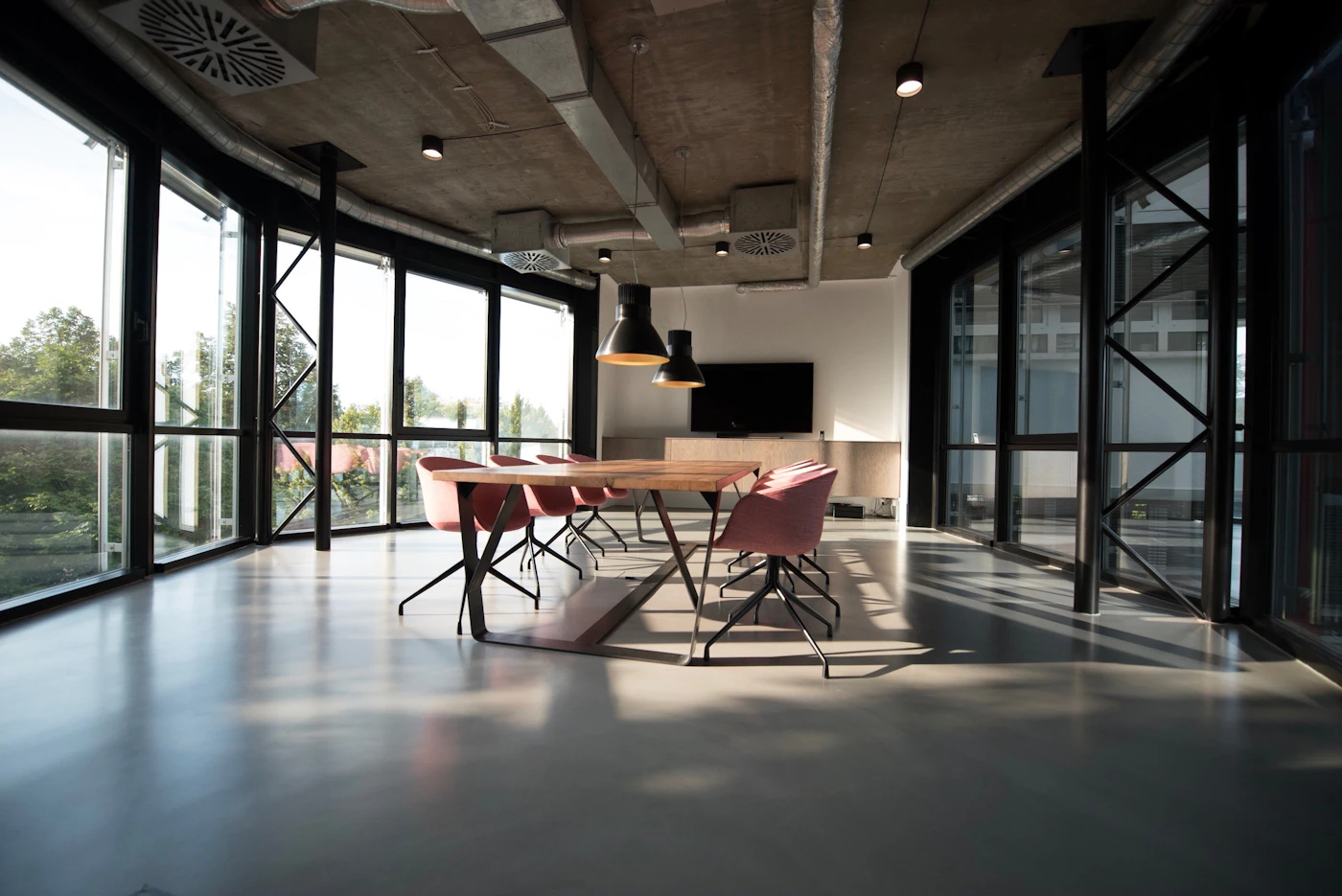
A quiet, organised commercial workspace with desks and natural light
Coordination happens off site, so nothing on site is interrupted.

Planning and growth

A plan that matches the size you are becoming

We work with owners on the practical side of growth: which accounts to pursue, what capacity each one demands, how to price the work honestly, and what has to be in place before the next contract is signed. Ambition stays intact. The guesswork does not.

Planning documents and figures laid out across a working table
Growth planning grounded in the operating reality of the company.

Also part of the engagement

  • Customer-service support

    A defined standard for how enquiries, complaints, and service recovery are handled, so the experience does not change depending on who answers.

  • Client follow-up and relationship management

    Structured follow-up on proposals, open issues, and renewals, with a record of every commitment made to a client.

  • Administrative and back-office support

    Scheduling coordination, documentation, reporting, and the daily administration that keeps contracts running cleanly.

  • Workflow and process development

    Written, repeatable procedures for the tasks your company performs most often, built around how your team actually works.

  • Operational coordination

    A steady link between office and field so schedule changes, access issues, and client requests reach the right people in time.

  • Market-expansion support

    Preparation for entering a new city, state, or province, including the communication and administrative load that expansion creates.

Commercial towers viewed from street level in a North American city

Specialisation

One industry, understood properly

We work only with facility-services companies. That focus matters, because the pressures in this industry are specific: thin margins, distributed crews, demanding property managers, seasonal swings, and contracts that are won slowly and lost quickly.

We already know what a scope-of-work dispute sounds like, why a missed periodic clean becomes a renewal problem, and how quickly a single unanswered email travels up to a regional director. You do not have to explain your world to us first.

What we are not

Streamline Consultancy is not a cleaning, janitorial, maintenance, landscaping, HVAC, plumbing, or electrical contractor. We never perform facility services and we never compete with our clients for their contracts. We support the business that delivers them.

Commercial cleaningJanitorial servicesFacility maintenance Landscaping and exteriorHVAC and mechanicalPlumbing and electrical Multi-service companiesProperty-service contractors

Experience and reach

Based in Byblos. Working to North American standards.

Six years

Working with facility-services companies on communication, coordination, and growth.

US and Canada

Our primary markets, with support aligned to North American business hours and expectations.

Byblos, Lebanon

Our base, and the reason we can offer sustained support at a cost that suits growing companies.

We also support facility-services companies outside North America. Wherever a client operates, the engagement is run in English, in writing, and on a schedule agreed in advance.

How we work

A method, not an improvisation

Every engagement follows the same five phases. What changes is the depth of each one.

  • 01

    Discovery

    We learn how your company communicates, sells, schedules, and recovers from problems today.

  • 02

    Business assessment

    We identify where communication breaks, where time is lost, and where growth would strain the operation.

  • 03

    Support plan

    A written plan setting out what we handle, what stays with your team, and how success will be judged.

  • 04

    Implementation

    We begin active support: client communication, follow-up, coordination, and documented workflows.

  • 05

    Review and optimisation

    Regular review of what is working, with adjustments as accounts, seasons, and markets change.
Start here

Tell us where the pressure is.

A first conversation costs nothing and commits you to nothing. We will ask about your accounts, your team, and the work that keeps landing on your desk, then tell you honestly whether we can help.

info@streamline-cons.com

About Streamline

An external partner for companies that keep buildings running.

We are a business-support and consulting firm working exclusively with facility-services companies. Six years of practice in one industry, applied to the parts of the business that clients notice most.

Sweeping structural curves of a modern public building

Purpose

We make small and mid-sized service companies feel larger, without asking them to become larger.

Most facility-services companies are built by operators. They know the work, the sites, and the crews. What they rarely have is a second layer of the business dedicated to communication, follow-up, and structure, because that layer is expensive to hire and easy to postpone.

Streamline Consultancy provides that layer from outside the company. We take on the client-facing correspondence and the back-office coordination, and we help owners design the processes that should have existed before the growth arrived.

The companies we work with are usually competent and busy in equal measure. Our job is not to reinvent them. It is to remove the friction that keeps good operators from being seen as organized businesses.

We are deliberately specialised. Working in one industry means our recommendations come from patterns we have seen repeatedly, not from general business theory adapted after the fact.

Six years

Focused on facility-services companies and the operational problems specific to them.

US and Canada

Our primary markets. Support is delivered in English and aligned to North American hours.

International

We also support facility-services companies operating outside North America.

Mission and vision

Mission

To help facility-services companies operate with the clarity, consistency, and structure their clients expect, so that growth becomes a decision the owner makes rather than a risk the owner absorbs.

Vision

A sector where small and mid-sized service companies compete on the strength of their operations and the quality of their client relationships, rather than on the size of the back office they can afford to build.

Operating principles

How we conduct an engagement

  • 01

    Clarity before complexity

    A simple process that people actually follow is worth more than a sophisticated one they work around. We start with the smallest structure that solves the problem.

  • 02

    Say what will happen, then do it

    Every engagement begins with a written scope: what we handle, what stays with your team, and how often we report. Surprises belong in the field, not in the working relationship.

  • 03

    The client's experience is the product

    Internally, the measure of a process is whether it holds up. Externally, the only measure is what your client experiences. We design for the second and let it discipline the first.

  • 04

    Write it down

    Verbal knowledge leaves with the person who holds it. Documented workflows, contact records, and decision logs make a company transferable, trainable, and easier to grow.

  • 05

    Fit the company, not the template

    A twelve-person janitorial firm and a multi-service contractor with four branches need different things. We adapt the method rather than issuing the same playbook twice.

  • 06

    Honest counsel over comfortable answers

    If a plan is premature, a market is wrong, or the constraint is internal, we say so early. We do not promise outcomes we cannot influence.

International perspective

Byblos, Lebanon. North American practice.

Our office is in Byblos, one of the oldest continuously inhabited cities in the world, on the Lebanese coast. Our work is almost entirely with companies in the United States and Canada, and it is organized around their calendars, their expectations, and their business hours.

Working from outside North America is deliberate. It allows us to offer sustained, senior-level support at a cost that a growing regional service company can actually carry, and it gives us a wider view of how service businesses operate in different markets.

Correspondence is in English. Agreements, reporting, and documentation are written. Availability is agreed in advance so that a client in Toronto or Dallas always knows when a response is due.

Exterior of a contemporary commercial building at dusk
Support delivered remotely, structured for North American operations.

Six years in one industry. Put it to work.

Tell us about your accounts and the parts of the week that keep getting away from you. We will tell you plainly whether an engagement makes sense.

Services

Eight ways we strengthen a facility-services business.

Engagements are assembled from the areas below. Most companies begin with one or two, then extend as the working relationship settles.

Every service below answers a problem owners describe to us in almost the same words.

Open the details under any service to see the challenge it addresses, what we do, and the practical benefit. We describe how we work; we do not guarantee commercial results.

01

Client Communication Management

We act as a consistent, professional point of contact for your accounts. Enquiries, schedule changes, and service requests are acknowledged promptly, routed to the right person, and confirmed back to the client once resolved.

The challenge

Client messages arrive across several phones and inboxes. Replies vary in tone and speed, and no one has a full picture of what was promised.

Our role

We centralise client correspondence, apply an agreed response standard, and keep a written record of every request and commitment.

The practical benefit

Clients receive one reliable voice. Your managers stop re-reading threads to work out what happened.

An organised office interior with clear sightlines
02

Customer-Service Support

We define and operate the customer-service standard for your company: how enquiries are answered, how complaints are handled, and how service recovery is confirmed and closed.

The challenge

Service recovery depends on who takes the call. A difficult site manager gets a different experience from a patient one.

Our role

We write the standard, handle incoming service issues to it, and escalate to your team with the context already gathered.

The practical benefit

Complaints are handled the same way every time, and problems are closed with a confirmation the client can point to.

What this covers

  • An agreed response standard and escalation path
  • Handling of enquiries, complaints, and service recovery
  • Written closure and confirmation to the client
  • A record of recurring issues by site and account
03

Business Planning and Growth Strategy

We work with owners on the practical mechanics of growth: which accounts to pursue, what each one demands operationally, how to price the work honestly, and what needs to exist internally before the next contract is signed.

The challenge

Growth decisions get made between site visits, based on instinct and the loudest opportunity of the month.

Our role

We build a written plan that ties target accounts to capacity, staffing, and administrative load, and we revisit it as conditions change.

The practical benefit

Owners can see the cost of a contract before winning it, and decline the ones that would quietly damage service quality.

Planning documents spread across a table
04

Operational and Administrative Support

The daily administration that keeps contracts running cleanly: scheduling coordination, documentation, reporting, supplier and subcontractor correspondence, and the reminders that would otherwise sit on an owner's phone.

The challenge

Administrative work expands with every new site, but hiring a full-time coordinator is hard to justify until the strain is already visible.

Our role

We take defined administrative processes off your team, run them to an agreed schedule, and report on what was completed.

The practical benefit

Supervisors spend their time on sites and crews instead of paperwork, and nothing routine depends on someone remembering.

What this covers

  • Scheduling and calendar coordination
  • Documentation, records, and reporting packs
  • Supplier and subcontractor correspondence
  • Routine administrative cycles run to a fixed schedule
05

Client Follow-Up and Relationship Management

Structured follow-up on proposals, open service issues, periodic work, and renewals, with a written record of what was promised to each client and when.

The challenge

Quotes go quiet, issues close without confirmation, and renewal conversations begin only when a contract is nearly expired.

Our role

We maintain a follow-up cycle for every open item and account, and prompt your team when a decision or a visit is needed.

The practical benefit

Fewer proposals lost to silence, and renewal discussions that begin from a position of attentiveness rather than urgency.

A calm meeting space in a commercial building
06

Workflow and Process Development

We document the tasks your company repeats most often, from onboarding a new site to handling an after-hours callout, and turn them into procedures your team can follow and train against.

The challenge

Knowledge sits with long-serving staff. Onboarding is verbal, quality varies by supervisor, and a resignation costs more than a salary.

Our role

We observe how the work is really done, write it into clear steps, and refine the version your team will use in practice.

The practical benefit

New staff become useful sooner, and standards survive turnover instead of leaving with it.

What this covers

  • Site onboarding and handover procedures
  • Complaint, callout, and escalation workflows
  • Quality-check and reporting routines
  • Training-ready documentation for supervisors
07

Market-Expansion Support

Preparation and support for entering a new city, state, or province: understanding local expectations, planning the communication load, and building the administrative structure a second market requires.

The challenge

A new market doubles the coordination before it doubles the revenue, and the head office absorbs the difference.

Our role

We map the added administrative and client-facing work, prepare the processes in advance, and support the first accounts through onboarding.

The practical benefit

Expansion is staged deliberately, and the original market does not deteriorate while attention moves to the new one.

Long structural lines of infrastructure receding into the distance
08

Facility-Services Business Consulting

Advisory work across the business as a whole: organisational structure, service-line decisions, pricing discipline, client-portfolio balance, and the sequence in which improvements should be made.

The challenge

Owners rarely lack ideas. They lack an outside view of which change to make first and what it will demand of the company.

Our role

We assess the business as a whole, set priorities in a written sequence, and stay involved while the changes are made.

The practical benefit

Effort goes to the constraint that is actually limiting the company, rather than to the improvement that is easiest to start.

What this covers

  • Structured assessment of the current operation
  • Service-line and client-portfolio review
  • Pricing discipline and margin discussion
  • A prioritised improvement sequence

Not sure which of these you need?

Most owners describe the symptom rather than the service. Describe the symptom. We will tell you where it usually starts.

Industries

The companies that keep commercial property working.

We support the business side of facility-services companies across eight service categories. The trade differs. The operational pressure rarely does.

Important distinction

We support these companies. We are not one of them.

Streamline Consultancy does not clean buildings, maintain equipment, cut grass, install ductwork, or wire panels. We hold no trade licences and we bid on no service contracts. Our work is business support and consulting: communication, coordination, planning, and structure for the companies that do perform that work.

Select a category

Where we fit inside your operation

A large commercial floor plate prepared for service

Commercial cleaning

Cleaning contracts are judged on consistency and on how quickly a complaint is resolved. Most disputes we see are not about cleaning quality at all; they are about a request that went unacknowledged, or a periodic task nobody confirmed had been done.

We manage the correspondence around those contracts so that every request is logged, routed, and closed in writing, and we help owners build the reporting that property managers ask for before they think to ask.

How we support the business

  • Day-to-day client correspondence across multiple sites
  • Complaint intake, routing, and written closure
  • Periodic-schedule tracking and client confirmation
  • Proposal follow-up and renewal preparation

What stays with your team

  • All cleaning work, staffing, and supervision
  • Site inspections and quality control
  • Final commercial and contractual decisions
Working in a category that is not listed here? If your company services commercial property under contract, the operational challenges are usually familiar to us. Tell us what you do and we will say plainly whether we are a fit.

Your trade is yours. The rest we can carry.

Tell us which services you deliver and where, and we will outline how an engagement would be structured around them.

How we work

Five phases, agreed in writing before anything begins.

Our method is deliberately unglamorous. It is designed so that an owner always knows what we are doing, why, and what comes next.

Consulting fails when nobody can say what changed. We fix that at the start.

Phases one to three are typically completed in the opening weeks of an engagement. Phase four is ongoing. Phase five recurs on an agreed schedule for as long as we work together.

01

Discovery

We start by listening rather than assessing. In a series of working conversations we learn how your company actually operates: who speaks to clients, how requests arrive, what happens when something goes wrong, and which parts of the week consistently overrun.

Nothing is recommended at this stage. The aim is an accurate picture, described in your language rather than ours.

What you receive

  • A written summary of how work currently flows
  • A list of the communication points we observed
  • Confirmation of scope for the assessment ahead
02

Business assessment

We examine where communication breaks down, where administrative time is lost, and which parts of the operation would strain first under growth. We look at the client experience from the outside as well, following the path a request takes from the moment it is sent.

Findings are presented directly. If the main constraint is internal or the timing for a change is wrong, we say so rather than proposing work around it.

What you receive

  • An assessment of communication and coordination gaps
  • The points most likely to fail as volume increases
  • A prioritised view of what to address first
03

Customised support plan

We produce a written plan setting out exactly which responsibilities we take on, which remain with your team, how we will communicate with your clients, what response standards apply, and how the engagement will be reviewed.

The plan is built around your company rather than a standard package, and it is agreed before any client-facing work begins.

What you receive

  • A written scope of responsibilities on both sides
  • Agreed response standards and escalation routes
  • A reporting rhythm and review schedule
04

Implementation and active support

We begin operating. Client correspondence, follow-up cycles, administrative coordination, and documented workflows move into service in the sequence agreed. Your team is introduced to the routines gradually so that daily service is never interrupted.

Throughout, we work as an extension of your company. Clients experience a well-run business, not an outsourced desk.

What you receive

  • Active handling of the agreed responsibilities
  • Documented workflows your team can follow
  • Regular updates on open items and commitments
05

Review and optimisation

At an agreed interval we review what is working, what is not, and what has changed in the business. New accounts, seasonal shifts, staffing changes, and expansion all alter the shape of the support required.

Adjustments are made deliberately and recorded, so the engagement stays aligned with the company rather than drifting into habit.

What you receive

  • A structured review of the period just completed
  • Agreed adjustments to scope or standards
  • An updated plan for the period ahead

Working rhythm

What working with us looks like week to week

Agreed hours

Availability is set in advance and aligned to your operating hours, so your team and your clients know when a response is due.

Written record

Commitments, client requests, and decisions are documented. Nothing important depends on a conversation someone half remembers.

Scheduled review

Progress and problems are discussed on a fixed cycle rather than only when something goes wrong.

We describe our method and our responsibilities, not guaranteed commercial outcomes. Results depend on the work your company delivers, the markets you operate in, and decisions that remain yours.

Phase one begins with a conversation.

Discovery is deliberately low-commitment. It costs you an hour or two of talking about how your company runs.

Insights

Notes on running a service business well.

Planned editorial covering communication, operations, and growth in the facility-services industry. Written for owners and managers, not for other consultants.

Interior of a modern commercial building with strong structural lines

Featured  ·  Concept article

Building a scalable client-communication function

Companies that grow calmly tend to treat client communication as an operating system rather than a personality trait. This piece will set out how to define response standards, decide what belongs in writing, choose who holds each relationship, and build a follow-up cycle that survives a busy month.

Planned insight. Full text will be published on this page.

Topics

Showing all six planned insights.

These titles and summaries are planned editorial topics presented for design review. They are not published research, and no findings, statistics, or authorship are implied.

Editorial list

Be told when the first pieces are published.

One message when an insight goes live. No newsletters, no sequences, no forwarding of your address to anyone.

Contact

Start a conversation with Streamline.

Tell us about your company and where the pressure is. We will reply with a straight answer about whether we can help and how an engagement would be shaped.

Consultation request

Request a consultation

Fields marked required must be completed. We use what you send only to prepare for the first conversation.

Enter your full name.
Enter your company name.
Enter a valid email address, for example name@company.com.
Enter a valid phone number.
Select the country your company operates in.
Select the category closest to your business.
Select the area you would like to discuss.
Tell us briefly what you would like to discuss.

Your enquiry will be sent securely to Streamline Consultancy.

Thank you. Your inquiry has been sent to Streamline Consultancy.

Your enquiry has been sent to Streamline Consultancy. We will review the information and reply by email.

Read about our services

Prefer email

Write to us directly at info@streamline-cons.com

Include your company name and the services you deliver, and we can make the first conversation far more useful.